
- 12/31/2022 – Pope Benedict XVI dies: Are We Reaching the End of Time?
- 12/19/2022 – Could an alien deception be part of the End Times ?
- 12/12/2022 – The Future of 2023 is gloomy according to Nostradamus …
- 11/12/2022 – Update: The Vladimir Putin Timeline.
- 12/11/2022 – Russia: Spiritual Hope of the World at The End Times?
- 08/11/2022 – Recap: The Prophecies of Baba Vanga – Europe will be “empty”.
- 24/08/2022 – After Ukraine, Moldova will follow … Spillover to NATO 95%
- 01/07/2022 – What does the Bible say about Vladimir Putin?
- 20/06/2022 – Russia & Ukraine days from war – Russia Prophecy Unfolding?
- 11/06/2022 – End of the world: The Bible !!!
- 12/25/2021 – COVID-19: The Real Danger is “Agenda ID2020” !?!
- 10/17/2021 – Nostradamus CoronaVirus and COVID-19 Predictions !!!
- 08/23/2021 – CoronaVirus outbreak predicted in 1981 !!!
- 08/17/2021 – CoronaVirus and The Bill Gates Foundation !!!
- 07/05/2021 – The Ancient astronauts Theory !
- 06/27/2021 – Is Our World a Simulation ? Some scientists say it’s likely !
WORLD WAR III COULD HAPPEN IN 2023 !
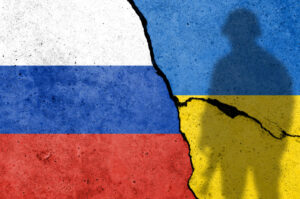
The future of 2023 is gloomy, according to a French astrologer whose prophecies from over 500 years ago have proven disturbingly accurate. Michel de Nostradame!
A time will come when Russia will be torn apart. First they will split her up, then they will start to plunder her wealth. The West will in every way try to further Russia’s destruction and hand over her eastern part to China. The Far East will fall into the hands of the Japanese. Siberia will fall to the Chinese, who will start to settle in Russia, marry Russians and eventually, through cunning and craft, occupy all Siberia as far as the Urals. When China tries to go further, the West will oppose it. Read The Full Article
DAMASCUS WILL BE DESTROYED BEFORE THE END OF TIME !
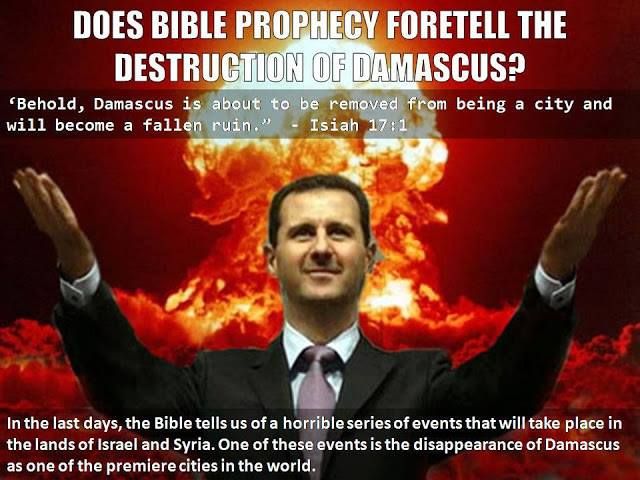
Syria is almost a ‘city-state’ with much of its population living in and around the city of Damascus. Some historians and archaeologists believe Damascus may be the oldest continually inhabited city in the world and there is no record in ancient history of it ever being fully destroyed. Syria is also the home of many Islamic terrorist groups and its army invaded and has occupied Lebanon for almost 30 years. Currently, Syria (with Iran) is supporting the Hezbollah in southern Lebanon against Israel. Syria, like the rest of Israel’s Islamic neighbors hate Israel, have invaded and attacked Israel on several occasions, and have publicly called for the destruction of Israel. It is interesting to note that recently an Israeli general, on commenting on the growing threat of Syria, said the easiest thing to do to protect Israel from Syria would be to drop a nuclear bomb on Damascus. Read The Full Article !
ARE WE ON THE BRINK OF WORLD WAR III ?
The rumors of wars has certainly begun as we have more and more political figures either stating WW3 is just around the corner or is already here. Has World War III already begun? WWI began with an assassination, WWII began with Hitler’s invasion of Poland. But WWIII could certainly start differently. As conservative talk show host Glenn Beck stated, WW3 is on the horizon and “nobody will recognize it yet.” Let’s look at a few of the prominent figures that warn us of WW3…. Check out the full article !
POPE FRANCIS I ELECTED “LAST POPE” ACCORDING ST-MALACHY !
Francis, born Jorge Mario Bergoglio on 17 December 1936) is the 266th and current / last pope of the Catholic Church since March 13, 2013. A native of Buenos Aires, Argentina, he was ordained as a priest in 1969. In 1998 he became the Archbishop of Buenos Aires, and in 2001 a cardinal. Elected as pope in 2013 following his predecessor Pope Benedict XVI’s resignation, Bergoglio chose “Francis” as his name. This marked the first time in papal history that this name had been used, and along with Pope John Paul I is one of only two times since Pope Lando’s brief 913 reign that a serving pope held a name unused by a predecessor. He is both the first Jesuit priest and the first native of the Americas to be elected Pope. He is also the first non-European pope since the 8th century….. Read the popes prophecy of St Malachy
Alamongordo Sitemap
